Take Your Practice Forward: Why Foot Health Practitioners Should Study Biomechanics and Orthotics
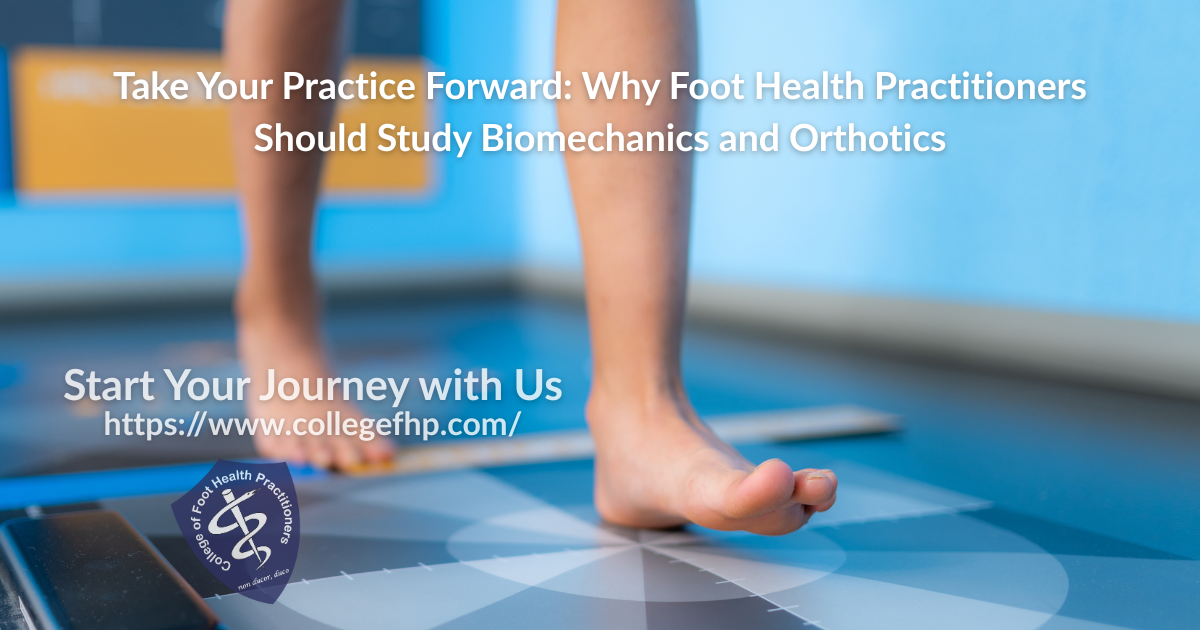
If you are looking to move your practice forward, Biomechanics and Orthotics is one of the most reliable ways to do it. Around 80% of pain in the leg and foot is of biomechanical origin. Most common lesions, including calluses, corns and joint problems, are linked to underlying biomechanical faults.
For practitioners, understanding the mechanical causes behind symptoms opens the door to genuine preventative care rather than repeated treatment of the same issues. It also strengthens clinical confidence and creates room for a wider range of services.
Why biomechanics matters
When you can recognise biomechanical issues early, you are better positioned to reduce pain, improve mobility and help patients avoid unnecessary surgical interventions to the hip, knee or back. Biomechanical understanding is also common among senior practitioners, which shows how valuable this knowledge is within the profession.
Offering this expertise can improve both patient outcomes and the long-term sustainability of your practice. It also creates the potential for an annual review system, like the approach used by opticians, dentists and veterinary surgeons.
About the course
The Biomechanics and Orthotics course from The College of Foot Health Practitioners is written for practitioners who want to support biomechanically compromised patients by reducing pain and extending mobility. The study gives a deeper appreciation of how the human foot is constructed and how it functions, making day-to-day practice more engaging and professionally rewarding.
Is it complicated or technical
Biomechanics can appear complex and academic, but for clinical use it is practical, targeted and highly effective. You do not need advanced scientific equipment or specialist tools to apply it in your work.
Does it need equipment or instrumentation
No specialist equipment is required. A pencil for taking notes is about as technical as it gets.
How is the course presented
The course is delivered through ten modules, followed by a one-day practical session and a fifty-question multiple-choice paper. Completion leads to the award of the Diploma in Biomechanics and the right to use the DipBMec post-nominals.
The programme includes essential anatomy, physiology and the core knowledge needed for effective biomechanical practice. It is also completely generic, so practitioners can work with any laboratory they choose. The course is mentored and presented in spiral-bound book form at a total cost of £450.
A smarter way to grow your practice
Studying biomechanics broadens your treatment options, builds confidence and increases earning potential. It also turns patient care into a longer-term professional relationship rather than one-off appointments.
If you want your practice to grow while delivering more meaningful, preventative care for your patients, Biomechanics and Orthotics is an investment worth making.